

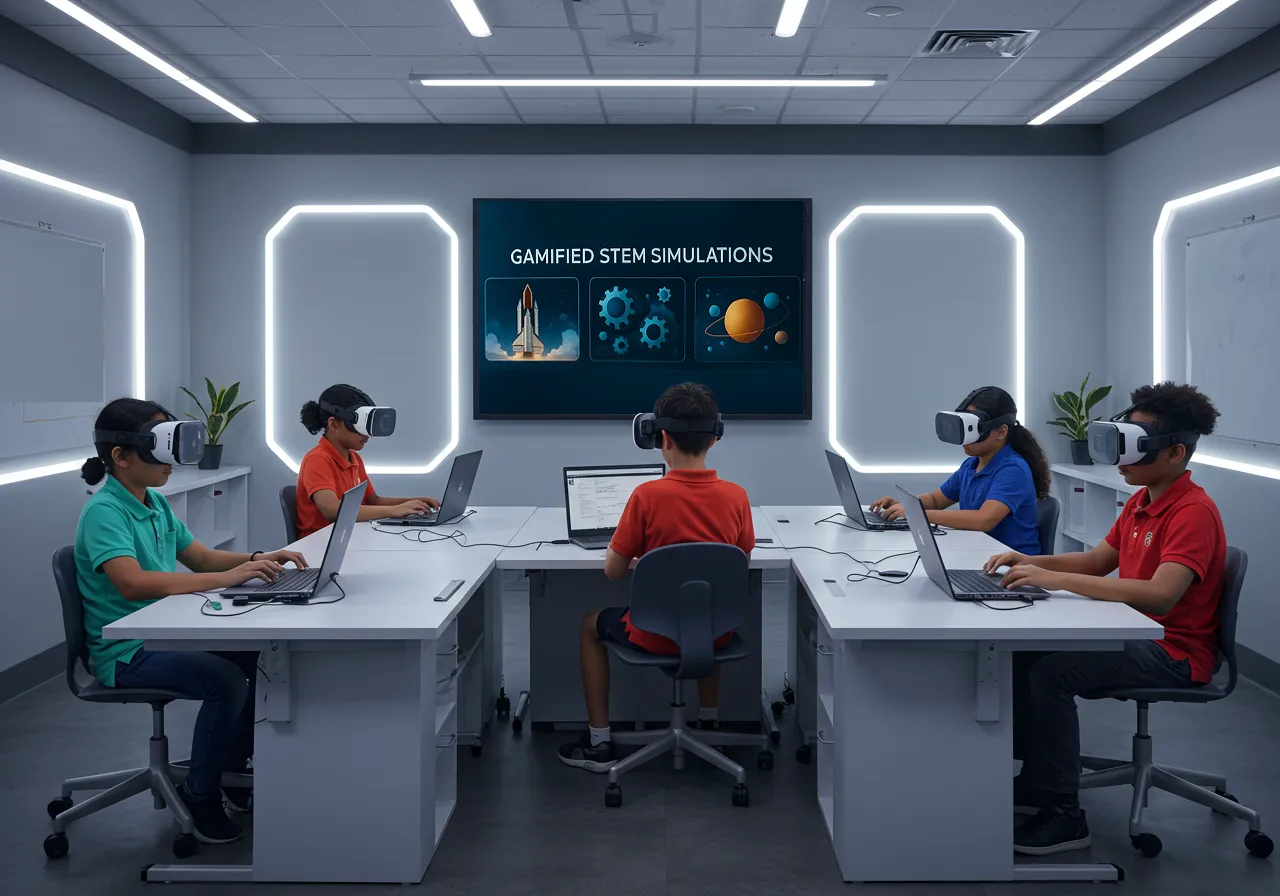
Gamified coursework is fundamentally changing the way students interact with educational materials, turning what used to be a passive listening exercise into a vibrant and interactive adventure. For generations, the classroom experience was defined by a teacher standing at a chalkboard while students frantically took notes, hoping to memorize enough information to pass a high-stakes exam. This traditional model often failed to ignite a true passion for learning, leading many students to feel disconnected or even bored by the subjects they were supposed to master. Now, by integrating the mechanics that make video games so addictive into the syllabus, educators are finding new ways to keep learners motivated and curious.
Imagine a high school history student named Maya who used to dread opening her textbook to read about ancient civilizations. In a traditional setting, she would struggle to remember dates and names that felt like distant, dusty relics of a forgotten past. However, her teacher recently introduced a platform where the entire semester is structured like a quest. Maya no longer just “studies” the Roman Empire; she earns experience points for completing research tasks and unlocks “legendary artifacts” by passing quizzes. The shift from a letter grade to a level-up system has transformed her anxiety into a sense of competitive excitement.
The magic of this approach lies in the way it handles the concept of failure. In a typical school environment, failing a test is often seen as a permanent mark on a student’s record, which can lead to a fear of taking risks or trying new things. In a game, however, failure is simply a part of the learning process. If you don’t beat a level on the first try, you analyze what went wrong, adjust your strategy, and try again. This iterative cycle builds resilience and a growth mindset, which are arguably more important for long-term success than the ability to recite facts from memory.
The Psychological Foundations of Gamified coursework
To understand why these systems are so effective, we have to look at the basic human desire for progress and achievement. When a student receives immediate feedback, such as a digital badge or a notification that they have unlocked a new module, their brain releases dopamine. This is the same chemical reward that keeps us scrolling through social media or playing “one more level” of a mobile game. By anchoring this reward system to educational goals, teachers can channel a student’s natural competitive drive toward something productive and life-enhancing.
This isn’t just about “making school fun” in a superficial way; it is about respecting the way the modern brain processes information. We live in a world of instant gratification and constant stimuli, and the slow pace of traditional lectures can feel jarring to a generation raised on interactive media. When we implement elements like progress bars, narrative arcs, and peer-to-peer challenges, we are creating a learning environment that feels familiar and engaging. It meets the students where they are, rather than demanding they conform to an outdated mode of instruction.
Furthermore, the sense of agency provided by these systems is a massive booster for intrinsic motivation. In a standard classroom, the teacher decides the pace, the order of topics, and the method of assessment. In a well-designed quest-based system, students often have choices. They might choose to complete a “creative writing quest” or a “research analysis quest” to earn the same number of points. This autonomy makes the student feel like the hero of their own educational journey, rather than a passive passenger on someone else’s bus.
Core Elements That Make Gamification Work
One of the most powerful tools in the educator’s toolkit is the leaderboard, but it must be used with care to avoid discouraging those who aren’t at the top. Instead of a single list that ranks everyone in the class, many teachers use “team-based” leaderboards or systems that track personal bests. This encourages collaboration and a sense of collective achievement. When a group of students works together to “defeat a boss” by collectively solving a set of complex math problems, they are learning vital social skills alongside their academic curriculum.
Narrative is another essential component that is often overlooked. A story provides context and meaning to otherwise abstract information. Instead of just learning about biology, students could be tasked with “saving a virtual ecosystem” from a mysterious virus. Every lab report they write and every chapter they read provides them with the “clues” or “tools” they need to solve the mystery. This narrative wrapper turns a series of disconnected assignments into a cohesive and compelling story that students actually want to follow to the end.
Badges and micro-credentials serve as visual markers of a student’s expertise. Unlike a final grade, which is a broad and often vague measure of performance, a badge can represent a specific skill, such as “Master of the Scientific Method” or “Expert Peer Reviewer.” These digital trophies allow students to build a unique portfolio of achievements that reflects their specific strengths and interests. It allows for a much more nuanced and celebratory way of tracking progress that goes beyond the traditional GPA.
Strategic Implementation of Gamified coursework in the Classroom
Moving toward a more interactive model doesn’t mean a teacher has to throw out their entire curriculum and become a game designer overnight. The most successful implementations often start small, perhaps by introducing a point system for participation or creating a single “themed” unit. This allows both the teacher and the students to adjust to the new dynamic without feeling overwhelmed. It is about layering game mechanics over existing high-quality content to enhance its delivery and impact.
As the system matures, the teacher can begin to introduce more complex elements, such as “easter eggs” hidden in the syllabus or “power-ups” that students can earn for helping their classmates. For example, a student who consistently provides high-quality feedback to their peers might earn a “Time-Turner” power-up, allowing them a one-day extension on a future assignment. These small, playful additions help to build a classroom culture that is based on mutual support and a shared sense of fun, rather than just academic pressure.
The role of the teacher in this environment shifts from being a lecturer to being a “Game Master” or a mentor. They are there to set the rules, provide the challenges, and offer support when a student gets stuck on a particularly difficult level. This shift allows for much more meaningful one-on-one interactions, as the teacher is no longer spent trying to manage the behavior of a bored class. Instead, they are moving around the room, facilitating discussions, and cheering on students as they reach new milestones in their gamified coursework.
Overcoming the Challenges and Pitfalls
While the benefits are numerous, it is important to acknowledge that gamification is not a magic wand that solves every educational problem. If it is done poorly, it can feel like “chocolate-covered broccoli”—a transparent attempt to make something boring appear interesting without actually changing the underlying experience. For gamified coursework to be truly effective, the game mechanics must be deeply integrated with the learning objectives. The “fun” parts should not be a distraction from the learning, but the very mechanism through which the learning happens.
There is also the risk of over-emphasizing extrinsic rewards, such as points and badges, to the point where students only care about the prize and not the knowledge. To counter this, educators must ensure that the challenges themselves are inherently interesting and that the rewards serve to celebrate mastery rather than just participation. The goal is to move the student from “I’m doing this to get a badge” to “I’m doing this because I’m genuinely curious about how this works.” This transition requires a thoughtful balance between the game elements and the academic rigor.
Another concern is the “digital divide” and the accessibility of technology. Not every student has access to a high-speed internet connection or a personal computer at home. Educators must be careful to design systems that are inclusive and don’t penalize students based on their socioeconomic status. This might mean using “analog” game mechanics in the classroom, such as physical cards or a wall-mounted progress chart, to ensure that everyone can participate regardless of their access to digital tools.
The Future of Higher Education and Professional Training
We are seeing a significant rise in gamified coursework within universities and corporate training programs as well. In these high-stakes environments, the ability to practice skills in a safe, simulated environment is invaluable. Medical students can “play” through a surgery simulation where the consequences of a mistake are a learning opportunity rather than a tragedy. Similarly, corporate employees can participate in “cybersecurity war games” to learn how to identify and respond to digital threats in a way that is far more engaging than a standard compliance video.
This approach is also helping to bridge the gap between education and employment. Many companies are now looking for “skills-based” hiring, and a gamified transcript that shows a student’s specific badges and XP in certain areas can be a powerful tool for recruiters. It provides a more granular view of what a person can actually do, rather than just where they went to school. This shift toward “demonstrated mastery” is a major trend that will continue to shape the workforce for years to come.
As artificial intelligence becomes more integrated into education, we will see even more personalized game paths. An AI can analyze a student’s performance in real-time and adjust the difficulty level of their “quests” to keep them in the “flow state”—the perfect balance between a challenge that is too easy and one that is too hard. This level of customization ensures that every student is working at their own optimal pace, maximizing their potential and preventing the frustration that leads to disengagement.
Building Inclusivity and Supporting Neurodiversity
One of the most heartening aspects of these interactive systems is how well they support neurodivergent learners. For students with ADHD, the frequent feedback loops and clearly defined goals of a gamified system can provide the structure they need to stay focused. The “chunking” of information into small, manageable tasks makes a daunting subject feel much more approachable. Instead of facing a giant, monolithic essay, they are completing a series of “mini-missions” that eventually add up to the final project.
For students on the autism spectrum, the clear rules and predictable outcomes of a game-like environment can reduce social anxiety and provide a sense of security. They know exactly what they need to do to succeed, and the feedback is objective and consistent. Many teachers have reported that students who were previously withdrawn or non-verbal in a traditional classroom suddenly become active and enthusiastic participants in a gamified setting. It provides a different “language” for communication and achievement that can be much more accessible for certain types of minds.
By focusing on a variety of ways to “win,” we also celebrate the diverse talents of all students. Some might excel at the “lore” quests (research), while others are masters of the “crafting” quests (design and creation). This allows every child to find an area where they can shine and contribute to the class community. It moves us away from a narrow definition of intelligence and toward a more holistic view of human potential, where creativity, collaboration, and problem-solving are valued just as much as memorization.
The Impact on Teacher Satisfaction and Burnout
It is not just the students who benefit from this shift; teachers are also finding new joy in their profession. Grading hundreds of identical worksheets is one of the most soul-crushing parts of being an educator. When a teacher implements gamified coursework, the “grading” often happens automatically through the platform, or it becomes a more dynamic part of the classroom interaction. This frees up the teacher’s time to do what they actually love: mentoring, inspiring, and engaging with their students on a personal level.
The classroom environment itself becomes more positive and collaborative. When students are excited to be there, behavior management issues tend to decrease. Instead of spending half the period trying to keep everyone quiet, the teacher is managing a “productive noise” as teams work together on their challenges. This change in atmosphere can significantly reduce teacher stress and burnout, making the profession more sustainable and rewarding in the long term. It reminds us that teaching is an art form, and like any art, it thrives on creativity and innovation.
Furthermore, many teachers find that they become learners alongside their students. Exploring new tools and platforms keeps their own minds sharp and allows them to model the very “growth mindset” they are trying to teach. They are no longer the source of all knowledge, but the curators of an experience. This humility and willingness to experiment creates a bond of mutual respect between the teacher and the students that is the foundation of any truly great educational experience.
Ensuring Long-term Knowledge Retention
One of the most frequent criticisms of gamification is the concern that it might prioritize “quick wins” over deep learning. However, research into the “spacing effect” and “retrieval practice” suggests that game mechanics can actually improve long-term retention. By building in “side quests” that require students to revisit older material to unlock new levels, we are encouraging the kind of constant review that is essential for moving information from short-term to long-term memory.
In a game, you never really “forget” how to use the basic controls because you are using them constantly to navigate more complex challenges. The same principle applies here. If a student needs to use their knowledge of basic algebra to solve a physics “puzzle” three months later, that knowledge becomes much more deeply ingrained than if they had just studied it for a single test and then never thought about it again. It creates a “scaffolded” learning experience where every new concept is built on a solid foundation of what came before.
We also have to consider the emotional connection to the material. We remember things that make us feel something. By wrapping a subject in a compelling story or a fun challenge, we are creating an emotional anchor for the information. A student might forget the exact definition of a word, but they will remember the time they used that word to “win a debate” or “solve a riddle” in their favorite class. These memories are the “hooks” that help us hold onto knowledge for a lifetime, turning a temporary grade into a permanent part of our intellectual identity.
Integrating Ethical Design and Data Privacy
As we move toward a more digital and data-driven approach to education, we must be vigilant about the ethical implications. Gamified coursework generates a massive amount of data on student behavior and performance. It is essential that this data is used solely for the benefit of the learner and that their privacy is protected with the highest standards of security. We must also be careful about the “dark patterns” often found in commercial gaming—things like “loot boxes” or “daily streaks”—that can encourage unhealthy levels of engagement.
The goal should always be “humane design” that respects the student’s time and mental health. We want to encourage motivation, but not at the cost of sleep or social interaction. Educators and platform designers must work together to create systems that are transparent, fair, and supportive. This includes allowing students to “pause” their progress without penalty and ensuring that the competition remains friendly and optional. We are using these tools to empower students, not to manipulate them for the sake of higher “engagement metrics.”
Transparency is also key for parent and administrator buy-in. It is important to show exactly how the game elements are tied to the state standards and the learning objectives. When a parent sees their child excited about homework for the first time in years, they are usually very supportive, but they also want to know that their child is actually learning the “basics.” By providing clear reports that map the student’s “in-game achievements” to their academic progress, we can build a bridge of trust between the school and the home.
Looking Ahead to a More Interactive World
The world our students will graduate into is one that is increasingly defined by interactivity, collaboration, and constant technological change. By using gamified coursework, we are not just teaching them academic subjects; we are teaching them how to navigate the complex systems of the 21st century. They are learning how to set goals, how to work in teams, how to fail gracefully, and how to stay curious in the face of a challenge. These are the “meta-skills” that will serve them well in any career they choose to pursue.
The classroom of the future won’t be a place where you sit and listen; it will be a place where you do and discover. It will be a place where the line between “work” and “play” is blurred, because both are seen as essential parts of the human experience. As we continue to refine these tools and techniques, we will find even more ways to unlock the incredible potential within every student. It is a journey that is just beginning, and the “final level” is a world where every learner is empowered, engaged, and inspired to reach their full potential.
Ultimately, the power of this approach comes back to the story we tell ourselves about what education is. Is it a hurdle to be cleared, or an adventure to be lived? By choosing to make the journey more engaging, we are telling our students that their curiosity matters and that their efforts are worth celebrating. We are giving them the tools to be the heroes of their own lives, and that is the greatest prize any teacher could ever give. The game of learning is the most important one we will ever play, and it’s time we made it an experience worth playing to the end.