

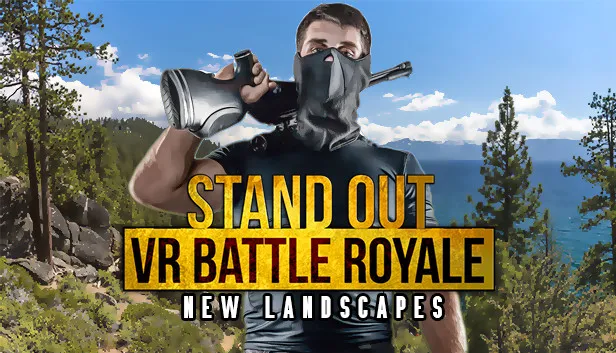
VR battle royale games are transforming the way players experience competitive shooters, turning passive gameplay into heart-pounding, full-body survival challenges. Instead of pressing buttons on a controller, you physically duck behind cover, reload with your hands, and scan the horizon as if your life truly depends on it.
If you’ve ever played a traditional battle royale title and imagined stepping directly into that world, virtual reality makes that fantasy real. The adrenaline rush is different. The tension feels heavier. Every decision carries weight because you are not just controlling a character — you are the character.
In this in-depth guide, we’ll explore how this genre evolved, what makes it unique, the top titles leading the charge, and why VR survival arenas could define the next decade of competitive gaming.
The Evolution of VR Battle Royale Games
The battle royale genre exploded in popularity with titles like PUBG: Battlegrounds and Fortnite. These games introduced massive maps, shrinking safe zones, and last-player-standing mechanics that captivated millions worldwide.
However, something was missing — immersion.
Virtual reality platforms like Meta Platforms (formerly Facebook) began pushing VR hardware into mainstream homes. As headsets improved in performance and affordability, developers saw an opportunity: what if players could physically step into the battlefield?
Early VR shooters experimented with movement and weapon mechanics. But it wasn’t long before full-scale survival arenas emerged. That’s when VR battle royale games truly began to reshape competitive multiplayer.
Unlike flat-screen games, VR requires developers to rethink everything — from locomotion systems to realistic weapon handling. The result is a genre that feels more intense, more personal, and often more exhausting in the best possible way.
What Makes VR Survival Arenas So Different?
The difference isn’t just visual. It’s physical.
In traditional games, combat relies on reflexes and button combinations. In VR, you manually aim, reload, crouch, and even climb. The added layer of body movement dramatically increases immersion and strategic depth.
Imagine hearing footsteps behind you. Instead of rotating a joystick, you physically turn your body. Instead of tapping “reload,” you grab a magazine and snap it into place. That extra layer of realism changes how you think under pressure.
VR battle royale games amplify tension because proximity feels real. When another player rushes toward you, your heart rate spikes — not because your avatar is in danger, but because your brain believes you are.
There’s also the psychological factor. In VR, hiding in a building feels claustrophobic. Peeking around corners feels risky. The shrinking safe zone becomes a looming threat you can almost sense physically.
Top Titles Dominating VR Battlefields
Population: One
Often considered the pioneer of large-scale VR battle royale games, Population: One introduced vertical freedom in VR combat. Players can climb any surface and glide across maps, adding a dynamic layer rarely seen in flat-screen shooters.
The mechanics feel intuitive, and team-based strategy plays a huge role. Communication and physical coordination make every match unique.
Contractors Showdown
Contractors Showdown leans heavily into realism. Weapon handling feels grounded, and tactical positioning becomes crucial. The game appeals to players who prefer authentic military-style engagements.
It showcases how VR battle royale games can move beyond arcade fun and into serious competitive territory.
Rec Room (Custom Battle Modes)
While not a pure battle royale, Rec Room allows user-generated survival arenas. Creative communities design custom last-man-standing modes, showing how flexible the genre can be in VR.
Why Gamers Are Shifting Toward VR Competition
The shift toward VR battle royale games isn’t accidental. Players crave deeper immersion. They want more than screen-based interaction.
Virtual reality provides physical engagement. You burn calories while playing. You improve spatial awareness. Some players even report enhanced reflex coordination after months of regular VR matches.
From a competitive standpoint, VR adds skill layers. It’s not only about reaction speed but body control, stamina, and positioning in real space.
There’s also the social factor. Voice chat in VR feels natural. You see teammates’ head movements and hand gestures. That level of presence builds stronger team dynamics compared to traditional online matches.
The Technology Powering Modern VR Arenas
Behind every great VR survival game is evolving hardware.
Devices like Meta Quest 3 and Valve Index offer high refresh rates and precise motion tracking. These advancements reduce latency and motion sickness, making longer sessions comfortable.
Developers are also integrating haptic feedback, spatial audio, and advanced physics engines. The more realistic the feedback, the more believable the combat becomes.
As 5G and cloud gaming infrastructure improve, multiplayer VR will become even more seamless. This technological growth ensures VR battle royale games continue evolving rapidly.
Competitive Scene and Esports Potential
Esports analysts are increasingly paying attention to VR tournaments. While still in early stages, organized competitions are emerging globally.
The physical nature of gameplay makes VR matches entertaining to watch. Spectators enjoy seeing players physically dodge, crouch, and react in real time.
Professional leagues may soon adopt VR formats similar to traditional esports events. With sponsorship from major tech companies and gaming brands, the competitive future looks promising.
VR battle royale games bring spectacle back into competitive gaming. They blend athletic movement with digital skill, creating a hybrid sport that feels both futuristic and raw.
Health, Fitness, and Unexpected Benefits
One overlooked advantage of VR shooters is physical activity. Unlike traditional gaming sessions that encourage sitting for hours, VR requires movement.
Players squat, stretch, reach, and pivot constantly. Over time, this adds up. Some fitness enthusiasts even incorporate VR matches into cardio routines.
Of course, safety matters. Clear your play area and maintain hydration. But when used responsibly, VR battle royale games offer an engaging alternative to sedentary gaming habits.
Challenges Facing the Genre
Despite rapid growth, VR still faces hurdles.
Hardware costs remain a barrier in some regions. Internet infrastructure may limit smooth multiplayer experiences. Developers must carefully design locomotion systems to prevent motion sickness.
There’s also the issue of player space. Not everyone has a large room for free movement.
However, technology continues to improve annually. Lighter headsets, better tracking, and wireless designs are addressing these limitations step by step.
The Future of VR Battle Royale Games
The next generation of VR battle royale games could incorporate AI-driven dynamic maps, realistic weather systems, and even biometric feedback integration.
Imagine a battlefield that reacts to your heart rate or adapts terrain based on match progression. Imagine full-body tracking that replicates every movement with precision.
Mixed reality features may also allow players to blend digital combat into physical environments safely. This fusion could redefine multiplayer gaming entirely.
As developers experiment and hardware advances, the gap between virtual and reality will continue shrinking.
EEAT Perspective: Why This Genre Matters
From an experience standpoint, VR shooters demand real skill. After spending hours inside virtual arenas, players develop genuine coordination improvements.
From an expertise angle, developers behind these titles often include veterans from major AAA studios. Their experience ensures balanced gameplay and ethical multiplayer design.
Authoritativeness grows as mainstream tech companies invest heavily in VR infrastructure. Consumer trust increases when established brands back innovation.
Trustworthiness is strengthened by transparent privacy policies and community moderation systems, ensuring safe online interactions.
All these factors support the long-term credibility of VR battle royale games as a sustainable gaming category.
Real-World Story: My First VR Survival Match
The first time I played a VR survival arena, I underestimated the intensity.
I spawned inside a deserted building. The sound of distant gunfire echoed through spatial audio. My hands felt slightly shaky as I reached for virtual gear.
Moments later, I heard footsteps above me. Instead of calmly rotating a joystick, I physically leaned against a wall and aimed upward. When the opponent dropped down, I instinctively ducked.
That moment changed how I viewed gaming forever.
Traditional shooters suddenly felt distant. VR had raised the emotional stakes.
Final Insights on the Genre’s Growth Curve
The gaming industry constantly reinvents itself. Arcade machines became consoles. Consoles evolved into online multiplayer ecosystems. Now, immersive reality is the next frontier.
With steady hardware innovation and creative experimentation, VR battle royale games are positioned for long-term expansion.
Developers are learning what works and what doesn’t. Communities are forming around competitive modes. Streaming platforms are beginning to highlight VR content more frequently.
This isn’t a short-term trend. It’s an evolutionary step.
For players seeking deeper immersion, physical engagement, and next-level competition, virtual survival arenas represent the most exciting space in modern gaming.
And as technology continues to close the gap between the physical and digital worlds, stepping into the battlefield might soon feel indistinguishable from reality.
bsf list planet
snap planet bsf list
bsf list planets order
snapchat bsf list planet order